


Internal Pocket Tech
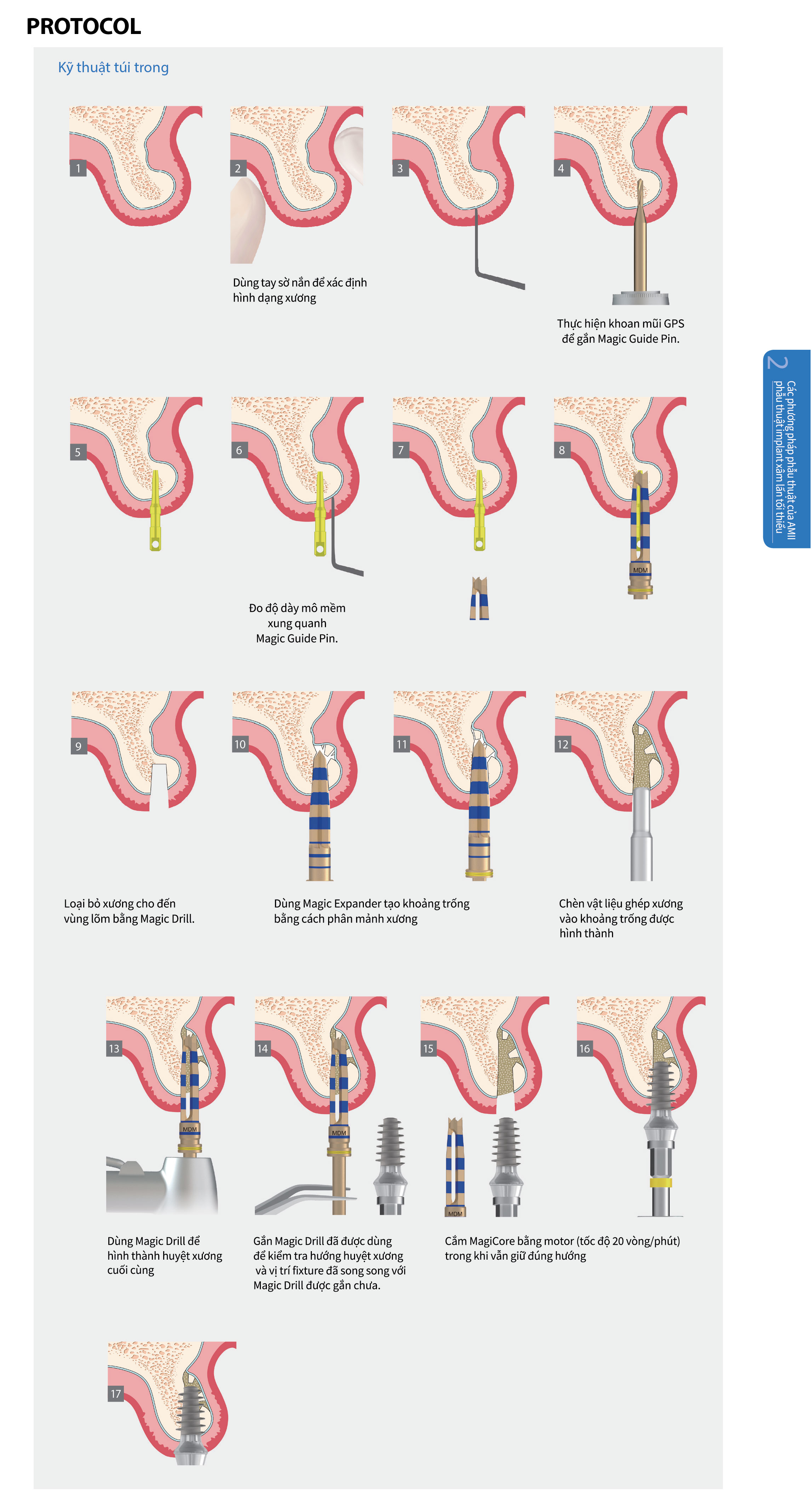
- Internal Pocket Technique enables bone grafting and minimally invasive implant treatments without elevation of overlying flap with crestal approach in case of cortical perforation is expected and narrow alveolar bone.

PROTOCOL
 Referring to the natural properties of periosteum, it follows that the adhesion force is less than the tensil force of the periosteum.
Periosteum is lifted by pushing the bone block in 4 directions. (superior, inferior, mesial, and distal).
New bone is formed following the GBR concept.
CAUTION
After exact measurement of depth to cortical perforation, perform drilling such that cortical plate is reached.
Detach the periosteum from the alveolar ridge, using the Periosteum Lifter. Make 4 detachments, mesial, distal, upper, and lower.
Additional final drilling to desired depth of placement after bone grafting.
Video
External Pocket Tech
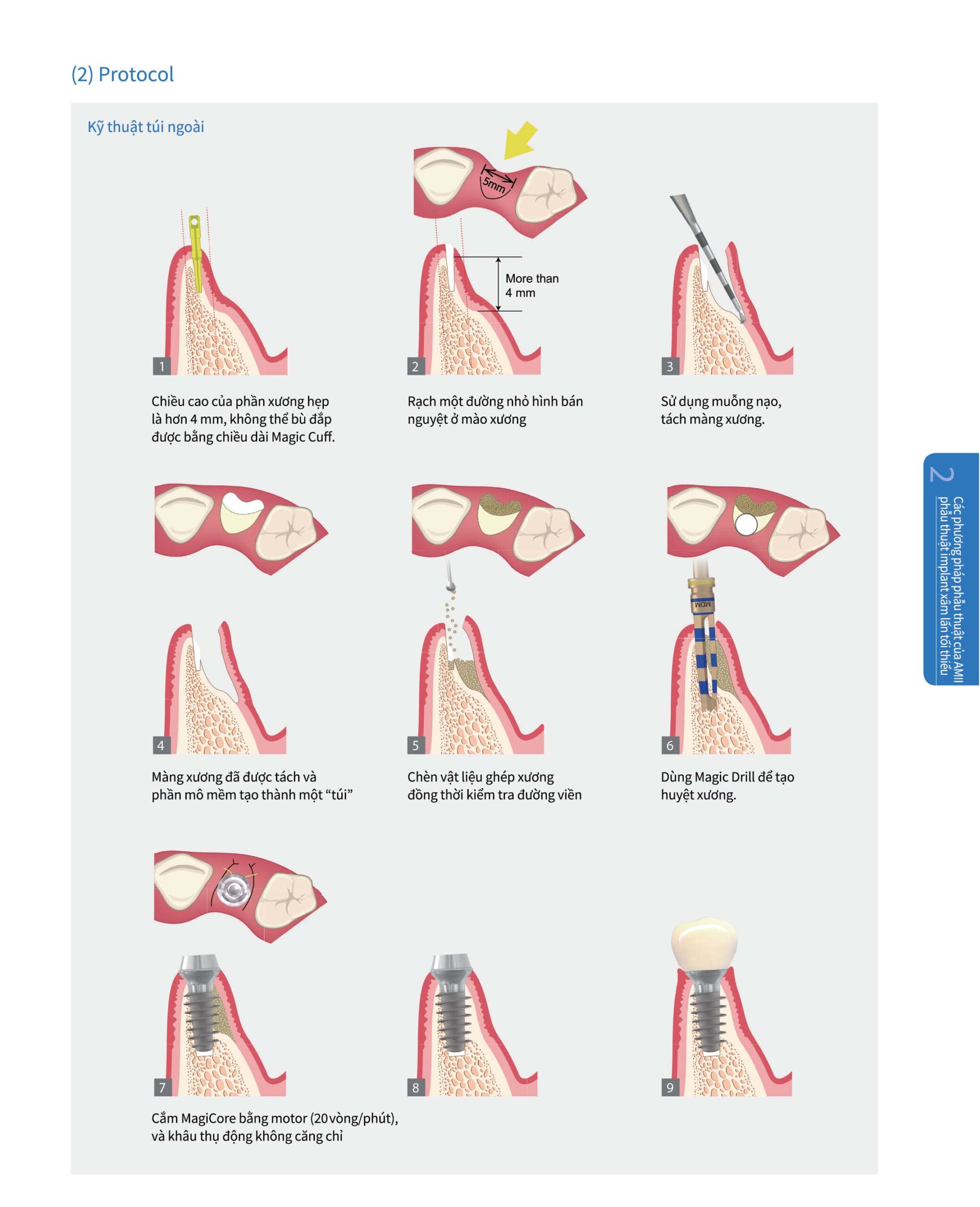
- External Pocket Technique is suitable for minimally invasive implant treatments improving the form of connective tissue by using crestal approach and it can be applied in the case of narrow ridge without elevation of overlying flap.
- It is especially useful in the narrow ridge resulting from buccal concavity and resolve the problem Magic Cuff can’t cover.
PROTOCOL
Make a 5mm incision where the crest lays. Make the incision concave towards the palatal (lingual).
Use the spoon excavator to detach a small portion of periosteum and insert graft until desired gingival shape is formed.
Drill and create the osteotomy when plenty of width is secured.
Place implant and close wound with a small suture. Depending on the situation, use the Omnivac to protect blood clots, or to protect and maintain the shape of the gingiva for 12 weeks.